Chapter Images and Summaries
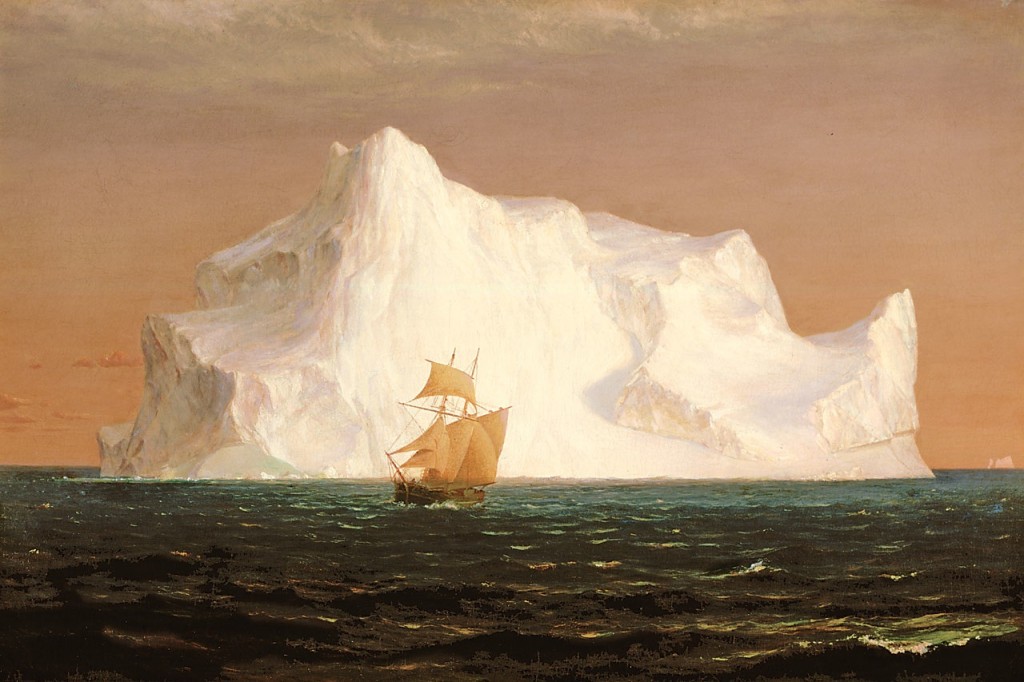
During Thoreau’s era, the unconsolidated sediments of Thoreau’s Concord landscape were called “drift” by scientists because iceberg-drift was the preferred explanation, a legacy of Noah’s flood pushed by the Reverend Edward Hitchcock, a professor of natural theology and the state geologist. Thoreau, following Louis Agassiz, thought this was balderdash, concluding that his landscape had been buried by a solid ice sheet, though not catastrophically.
This site is designed to give you a sense of the whole book without the need to read it.
Prologue Contains the story of this book, with acknowledgments
Introduction Introducing “my Thoreau,” the de-scendentalist who called himself Walden’s “stony shore.”
Part I – The Place of the Book
1 – Rock Reality The tectonic origin of Concord rock and Thoreau’s rock and mineral collecting.
2 – Landscape of Loss The landscape is created from that rock, featuring the Walden paleo-valley.
3 – Thoreau’s Arctic Vision Thoreau comes to grips with the glacial theory and explains his landscape.
4 – After the Deluge Following Charles Darwin, Thoreau reconstructs his postglacial water-world.
5 – Meltdown to Beauty Creation story for the star-shaped western basin of Walden Pond.
Interlude
6 – The Walden System Lake Walden as the real “Machine in the Garden,” a system in steady state.
Part II – The Book of the Place
7 – Sensing Walden Thoreau sojourns with a scientific purpose: to gather information for his poetry.
8 – Writing Walden His literary techniques: Composite; Black Hole; Threshing Floor; Perceptual Compass.
9 – Interpreting Walden Exegesis of his bathymetric survey and the Deep Cut. The authors intransitive mind.
10 – Mythology He writes an alternative Natural Theology and substitutes religious myth for the cold hard facts.
11 – Simplicity Thoreau’s downward path to a philosophy of life.
Epilogue On the similarities between Thoreau’s grave site in Sleepy Hollow and his house site at Walden.