
Definitions
Oxford Languages defines scholarship as “academic study or achievement,” part of which is research, which they define as “the systematic investigation into and study of materials and sources in order to establish facts and reach new conclusions.” When describing myself, I prefer the term scholarship because it’s more inclusive and more creative. My work as a STEM scientist is clearly research with an emphasis on content. My work as a scholar of environmental humanities is also about content, but with greater attention to how the content is presented.
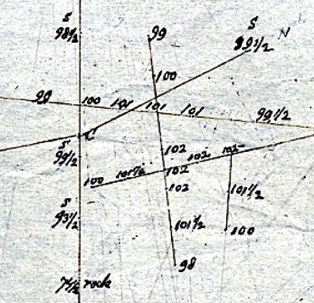
Scientific Research
Field and Lab research, Scientific Societies, External Funding, Analytics. Link to Science.
I rely heavily on three scientific methods: The default method is the default scientific method, the cognitive, stepwise algorithm of observation, generalization, question formation, hypothesis generation, testing, interpreting, communicating, and repeating. These are the footsteps of science. The main question is: “True or false?”
My favorite, and equally important, method is systems thinking. The back-and-forth breaking down of wholes into parts via deduction-analysis and the assembly of parts into wholes via induction-synthesis. The main question answered is” “How does it work?”
My third essential method is the thought experiment. We must imagine what we cannot experience using metaphor and analogy. The main question is “What if?”
Humanities Scholarship
Archival research, Scholarly books, Book Chapters, Book Reviews, Societies. Link to Humanities.
The main reason that I have emphasized this in the second half of my career is that humans respond to situations as humans, whose ancient, naturally evolved emotional behaviors trump more recently evolved cognitive thinking. Heart trumps head. Mythology trumps reality. Interesting misinformation trumps evidence. If we wish to employ science (evidence-based thinking) in politics, we must work around the instinctive emotional biases of humans, as reflected in the humanities, meaning art, music, and literature. All scientists are humanists, but not all humanists are scientists. The intellectual apartheid between these realms needs to be overcome.