Life’s work
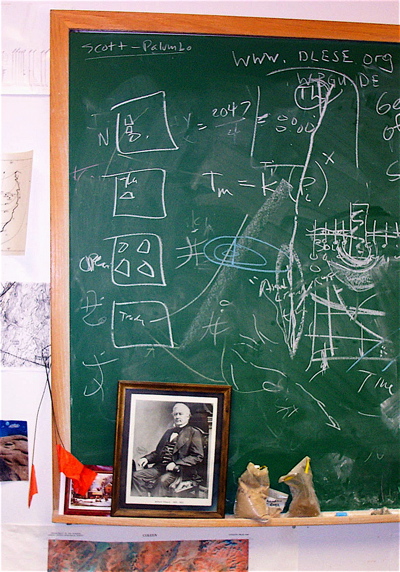
My Life’s work as a professor has been to help my students become more effective planetary citizens. That’s forty-seven years and counting of classes, field trips, labs, seminars, workshops, textbook writing, and developing online courses. Without doubt, teaching is my most satisfying modality for sharing the knowledge and skills I have acquired over my personal deep time. This has been the case since earning my B.S. degree in Earth Science Teaching in 1973 with a Minnesota state certification as a secondary school science teacher. My teaching now ranges from first-year Honors Seminars to PhD graduates.
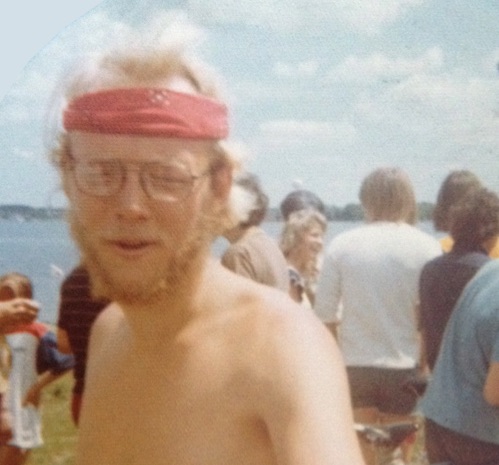
Highlights – Seven highlights from a college teaching career spanning forty six years at three universities.
Department of Earth Sciences – Courses regularly taught in person in ERTH. Also, an archive of past courses.
Honors Program – Institutional instructional, advising, and liaison roles.
Graduate Students – Role in teaching and advising graduate students.
Online Courses – I created the first two online courses for UConn’s E-Campus. ERTH 1051 – Earth’s Dynamic Environment, and ERTH 1000E – The Human Epoch: Living in the Anthropocene. These are still being taught by other faculty.
Early College Experience – Our program in Connecticut High Schools.
Guest Lecturing – Regular invitations to guest-lecture in UConn Courses and at other universities. .
Legacy
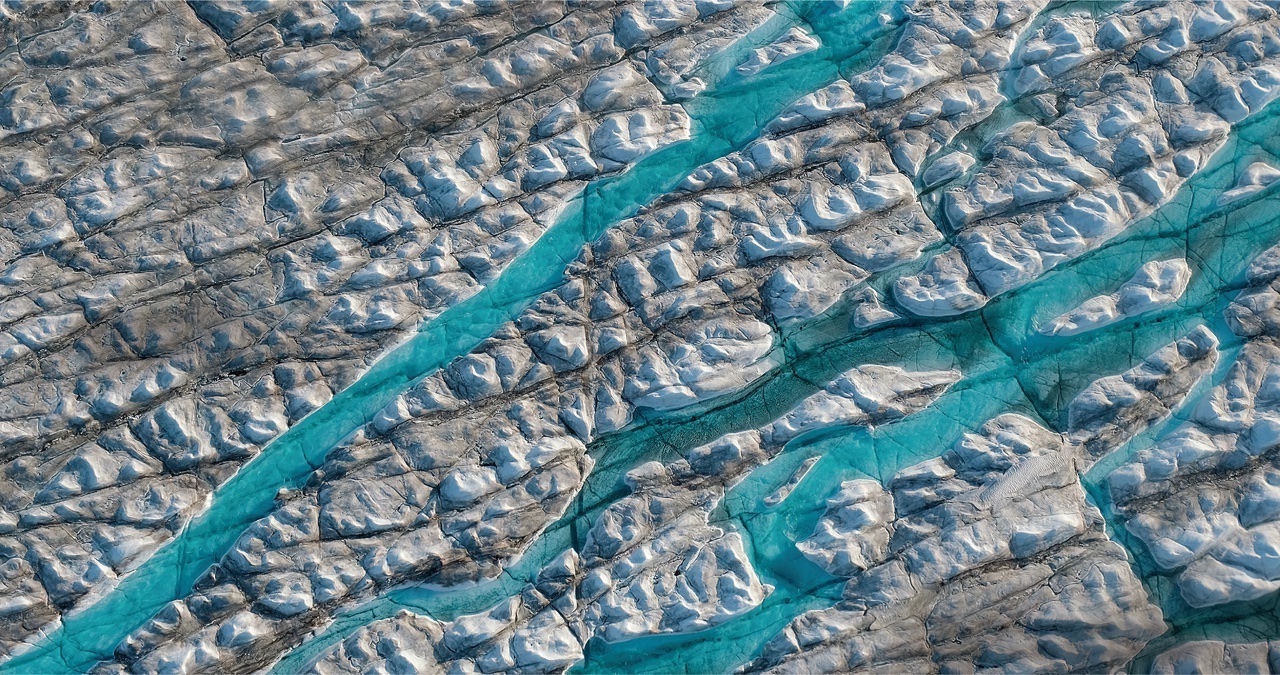
For a scientist at a research university, I’ve had an unusual teaching trajectory, choosing to concentrate on science literacy and honors education, both at the undergraduate level. After 47 years at three institutions there are:
Thousands of survivors of my introductory courses, some of whom have advised their children to enroll or not to enroll in my courses. Without knowing it, I could be teaching the grandchildren of my first students. The child of a 20-year-old expectant parent in 1979 could have been a 20-year-old expectant parent in 1999, and the grandchild in 2019.
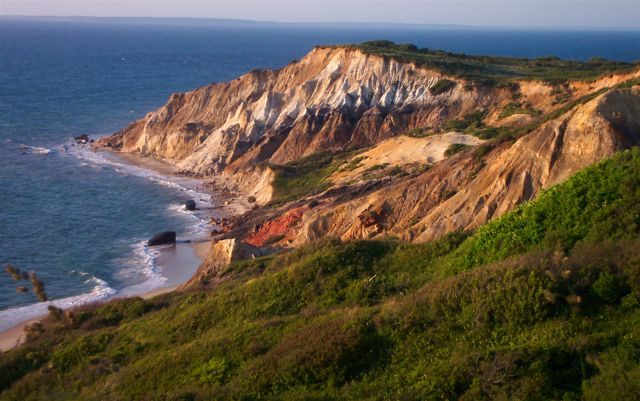
Hundreds of majors in environmental science, geology, and Earth-science teaching have completed a portfolios of work for me and presented that work in symposia. For many, it was their only field-based course.
Dozens of graduate student who I have taught in courses and either advised or co-advised at the MS or Ph.D. level.